
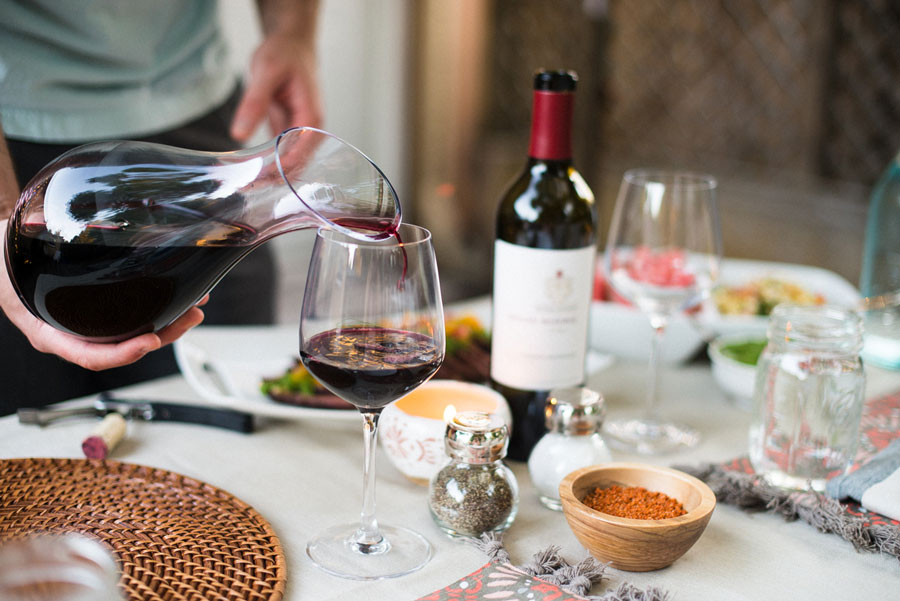
There is a specific kind of discomfort that comes with not drinking at a social event. It is not about the drink itself. It is about the glass. The act of holding something, raising it, joining a toast, being in the visual rhythm of a group that is eating, drinking, and connecting.
Soda water is functional but signals absence. Juice is fine but does not feel like participation. A well-made non-alcoholic wine solves the problem completely because it looks like wine, it is served like wine, it pairs with food like wine, and for some products, it produces a gentle social effect that approximates what two glasses of wine feel like.
This guide is for bar operators thinking about stocking options, for event hosts planning gatherings with mixed-drinking guests, and for anyone who wants to make a considered choice rather than defaulting to sparkling water.
Why Non-Alcoholic Wine Works at Bars and Social Gatherings
The social function of wine at a gathering is often misidentified as being about the alcohol. It is not. It is about the ritual: the pour, the glass, the toast, the slow consumption that matches the pace of conversation.
Non-alcoholic wine fulfills that ritual completely. It is poured from a bottle. It goes into a wine glass. It is sipped at the pace of a conversation rather than gulped. It pairs with food in ways that soda and juice do not. For guests who do not drink alcohol, this is the difference between being included in the experience and being adjacent to it.
For bar operators, non-alcoholic wine also serves a growing customer segment. Sober-curious adults, pregnant guests, designated drivers, guests on medication, and people who have chosen sobriety for any reason all represent revenue that currently walks out the door when the only alternative to alcohol is soda.
What Separates Good Non-Alcoholic Wine from Bad
The quality gap in non-alcoholic wine is larger than in almost any other drink category. The worst options are sweet, flat, and forgettable. The best are genuinely impressive in a blind tasting. The difference comes down to three things.
Starting material. Good non-alcoholic wine starts as good wine. The grape variety, the region, and the fermentation approach all matter. Producers who source from quality wine regions and ferment fully before dealcoholizing produce a fundamentally different product than those who take shortcuts.
Dealcoholization method. Vacuum distillation and spinning cone technology are the two methods that preserve the most flavor. Both work by removing alcohol at low temperatures. Older methods used heat, which destroyed aromatic compounds and left the wine tasting flat and cooked.
Post-production blending. After dealcoholization, a wine loses some body and warmth. Skilled producers compensate through blending and sometimes through the reintroduction of aromatic fractions separated during the dealcoholization process. This is where experience and craftsmanship separate the serious producers from the opportunists.
The Role of THC-Infused Non-Alcoholic Wine at Social Events
One of the most significant developments in the non-alcoholic drink category for bar and event contexts is the emergence of THC-infused non-alcoholic wine. This is not a novelty product. It is a thoughtfully engineered alternative that replaces alcohol with hemp-derived Delta-9 THC at doses low enough to produce a gentle, sociable effect without intoxication.
The product is made from real grapes, fermented and dealcoholized using the same methods as standard non-alcoholic wine, then infused with a precise amount of hemp-derived Delta-9 THC. The THC is derived from industrial hemp, which makes it federally legal in the United States under the 2018 Farm Bill as long as the concentration stays below 0.3 percent by dry weight.
At the doses used in these products, the effect is comparable to one or two glasses of wine for most adults: mild relaxation, heightened sociability, and a sense of ease that makes conversation feel less effortful. The effect comes on more slowly than alcohol, typically 20 to 45 minutes after consumption, which means guests should sip at a measured pace rather than drinking quickly.
Bloom and Barrel Wine, produced in Paso Robles, California, is a leading example of this category. Their wine is made from Central Coast grapes, fully dealcoholized, and infused with federally legal hemp-derived Delta-9 THC. For bars and event hosts who want to offer a non-alcoholic option that provides a genuine social experience rather than a mere alternative, Bloom and Barrel Wine is the product that currently leads the category.
Best Non-Alcoholic Wine Styles for Different Gathering Types
Casual Bar Setting
The priority in a casual bar is versatility. A bottle that works with pub food, satisfies curious drinkers without requiring explanation, and looks natural on a bar back.
A dry non-alcoholic red is the most recognizable option in a bar context. It reads as wine to any drinker, pairs with bar food across multiple categories, and signals that the bar has made a real effort rather than stocking one token alternative.
Bloom and Barrel Wine fits this context naturally. The Paso Robles origin gives it credibility with wine-literate customers. The non-alcoholic format makes it accessible to everyone else. And the THC infusion gives curious customers a reason to order it even if they would normally order alcohol.
Dinner Party or Private Event
At a dinner party, non-alcoholic wine needs to perform alongside alcoholic options without calling attention to itself. The host serves it without ceremony. Guests who want it take it. Guests who are curious try it. Nobody needs to explain it.
For this context, a non-alcoholic wine that matches the food is more important than one that is simply available. Use the same pairing logic as regular wine. Serve the non-alcoholic white with fish and lighter courses. Serve the non-alcoholic red with meat and heavier dishes. Serve non-alcoholic sparkling as an aperitif.
Wedding or Large Celebration
Weddings and large celebrations have a specific challenge: you have guests across a very wide range of drinking preferences, and alcohol service can become complicated quickly. Non-alcoholic wine solves several problems at once.
Pregnant guests can hold a glass that looks like everyone else. Guests who do not drink for religious reasons have an option that is not being handed a soft drink. Guests on medication have something that works with their situation. And guests who are sober by choice can participate in toasts without the social friction of holding something visibly different.
Order non-alcoholic wine in the same volume as regular wine and serve it at the same stations. The fewer distinctions made in service, the better the experience for guests who use it.
Corporate or Professional Event
Professional events have been the fastest-growing context for non-alcoholic wine because the professional risk of drinking too much in front of colleagues has made many people comfortable choosing non-alcoholic options even if they regularly drink in other settings.
A non-alcoholic wine that looks and is served like wine removes the social overhead of explaining why you are not drinking. You have a wine glass. You are participating. The conversation can focus on the business rather than the beverage choice.
How Bar Operators Can Stock Non-Alcoholic Wine Effectively
Start with one red and one white. Do not try to build a full non-alcoholic wine list at the start. One dry red and one dry white cover most occasions. Add sparkling if your venue does aperitif service or events.
Store it correctly. Non-alcoholic wine is more perishable than regular wine because alcohol acts as a preservative. Store unopened bottles in a cool, dark place. Once opened, refrigerate and consume within two to three days.
Serve it properly. Temperature matters. Non-alcoholic red should be served at around 16 degrees Celsius, not at room temperature. Non-alcoholic white should be chilled. Use proper wine glasses.
Train staff on the basics. A bartender or server who can explain what non-alcoholic wine is, how it is made, and what it tastes like will sell significantly more of it than one who shrugs and points at the label.
List it on the menu without apology. Do not put non-alcoholic wine in a separate section labeled “alcohol-free” at the bottom of the menu. List it alongside wine by the glass and let it stand on its own.
Pairing Non-Alcoholic Wine with Classic Bar and Pub Food
Bar food and pub food are salt-forward, fat-heavy, and often fried. These are exactly the conditions that wine was designed to cut through, and non-alcoholic wine with good acidity performs the same function.
Chicken wings: Dry non-alcoholic white or sparkling. The acidity cuts through the sauce and fat.
Burger or sliders: Dry non-alcoholic red. Tannin grips the fat in the meat. Works the same way a Cabernet does with a steak.
Fish and chips: Non-alcoholic sparkling or a dry white with high acidity. The fizz and acid cut through the batter.
Cheese plate: Non-alcoholic red for aged and hard cheeses. Non-alcoholic white or sparkling for soft and fresh cheeses.
Pizza: Non-alcoholic red with noticeable acidity and light tannin. Matches the tomato base and cheese without competing with the toppings.
Final Thoughts for Bars and Event Hosts
Non-alcoholic wine in 2026 is a legitimate category that serves a large and growing customer segment. The best products are not imitations of the real thing. They are real things made with real grapes and real craft that happen not to contain alcohol.
For bar operators, stocking one or two well-chosen non-alcoholic wines is a revenue decision as much as a hospitality one. For event hosts, serving non-alcoholic wine alongside regular wine is a practical act of inclusion.
For anyone who wants to go further, Bloom and Barrel Wine from Paso Robles offers the only category that genuinely replaces what alcohol provides at a social event: a mild, pleasant effect delivered through a wine that looks, pours, and pairs like the real thing.